

If you’ve ever heard a pastor close a service with the words “The Lord bless you and keep you,” you’ve heard the Aaronic Blessing. It’s one of the oldest recorded prayers in human history, and it still carries the same weight it did over 3,000 years ago.
This article walks through what the Aaronic Blessing means, where it comes from in Scripture, how to pray it, and how you can use it in your own life, whether you’re blessing your children, closing a worship service, or simply seeking peace in a hard season.
What Is the Aaronic Blessing?
The Aaronic Blessing, also called the Priestly Blessing or Birkat Kohanim in Hebrew, is a short benediction found in the Book of Numbers. God gave these exact words to Moses and instructed Aaron, Israel’s first high priest, and his descendants to speak them over the people.
It isn’t a suggestion or a general well-wish. It’s a direct command from God, meant to place His name and His favor over His people. Archaeologists even found this blessing inscribed on two small silver scrolls dating back roughly 2,600 years, making it one of the oldest surviving pieces of biblical text ever discovered.
Aaronic Blessing Meaning in the Bible
At its core, the Aaronic Blessing is God’s way of putting His own name on His people. In Numbers 6:27, right after giving Aaron the words, God says that by speaking this blessing, the priests would “put my name on the Israelites, and I will bless them.”
That’s the key to understanding it. This isn’t Aaron’s blessing in the sense that he invented it; it’s God’s blessing, delivered through Aaron. The priest is simply the messenger. The power and the promise both belong to God.
The Aaronic Blessing Bible Verse – Numbers 6:24–26
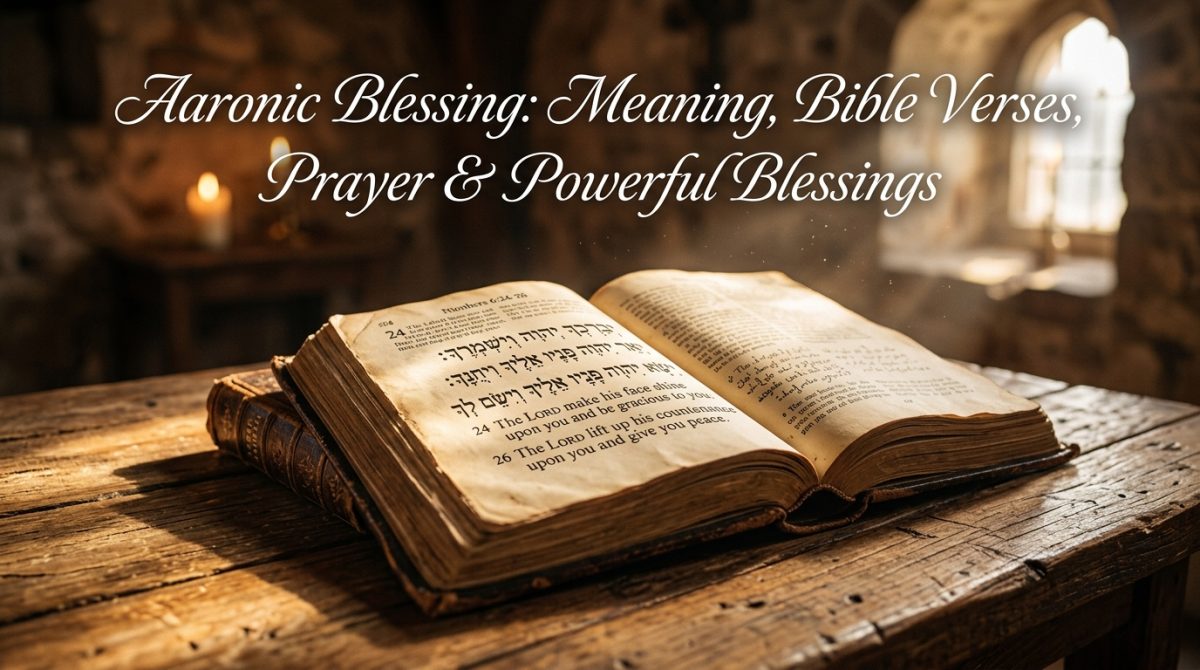
Here is the blessing in its most familiar English form:
“The Lord bless you and keep you; the Lord make his face shine on you and be gracious to you; the Lord turn his face toward you and give you peace.”
Short, rhythmic, and deeply personal, every line addresses “you” in the singular, as if God is speaking directly to one person, even when it’s prayed over a crowd.
What Does the Aaronic Blessing Mean?
Breaking down the language line by line helps unlock its full meaning:
- “Bless you” – asking God to provide, favor, and add goodness to your life.
- “Keep you” – asking God to guard, protect, and preserve you from harm.
- “Make his face shine on you” – a picture of God’s delight and approval, like sunlight breaking through clouds.
- “Be gracious to you” – asking for unearned kindness and mercy, even when we don’t deserve it.
- “Turn his face toward you” – asking for God’s full attention and presence, not distance.
- “Give you peace” – the Hebrew word here is shalom, meaning far more than the absence of conflict. It points to wholeness, completeness, and well-being in every area of life.
The Aaronic Blessing in Hebrew and English

Seeing the blessing in its original Hebrew adds depth to the English translation. Below is a side-by-side comparison.
| English | Hebrew Transliteration |
| The Lord bless you and keep you | Yevarechecha Adonai ve’yishmerecha |
| The Lord make His face shine on you and be gracious to you | Ya’er Adonai panav eleicha vichuneka |
| The Lord lift His countenance on you and give you peace | Yissa Adonai panav eleicha veyasem lecha shalom |
Interestingly, each line grows longer than the one before it: three Hebrew words, then five, then seven. Many scholars see this as a deliberate literary pattern, a “crescendo” that builds toward the final and greatest gift: peace.
Aaronic Blessing in the Bible KJV
The King James Version renders the same passage with slightly older English phrasing:
“The Lord bless thee, and keep thee: The Lord make his face shine upon thee, and be gracious unto thee: The Lord lift his countenance upon thee, and give thee peace.” (Numbers 6:24–26, KJV)
The meaning is identical to modern translations, but the KJV’s poetic, formal tone is part of why this blessing has stayed so memorable across generations of churchgoers.
The Aaronic Blessing from Numbers 6:22-27

To fully appreciate the blessing, it helps to read the surrounding verses. God doesn’t just hand Moses three lines of poetry. He gives clear instructions:
- God speaks to Moses.
- Moses is told to instruct Aaron and his sons on exactly how to bless the people.
- The specific words of the blessing are given (verses 24–26).
- God explains the purpose: by speaking His name over the people, He himself will bless them (verse 27).
This context matters because it shows the blessing was never meant to be a magic formula. It’s an act of obedience and worship that invites God’s own presence and favor.
Aaronic Blessing Numbers 6:24-26
For quick reference, here is the core blessing again exactly as most Bibles present it:
“The Lord bless you and keep you; the Lord make his face shine on you and be gracious to you; the Lord turn his face toward you and give you peace.”
This is the verse most people mean when they say “the Aaronic Blessing” or “the priestly blessing.”
Teaching To Take You Deeper Into God’s Word

Studying this blessing isn’t just about memorizing pretty words. It’s an invitation to explore themes that run throughout Scripture: God’s covenant faithfulness, His desire to be close to His people, and His heart for peace over chaos. Reading Numbers 6 alongside passages like Psalm 121 (on God as our keeper) or John 14:27 (on the peace Jesus gives) can deepen your understanding of how this ancient prayer still connects to the whole story of the Bible.
The Three Parts of the Aaronic Blessing Explained
The blessing naturally divides into three distinct petitions, each building on the one before it.
| Part | Phrase | Core Meaning |
| 1 | “The Lord bless you and keep you” | Provision and protection |
| 2 | “The Lord make his face shine on you and be gracious to you” | Favor and grace |
| 3 | “The Lord turn his face toward you and give you peace” | Presence and wholeness |
Each part moves from the material (provision) to the relational (favor) to the spiritual (peace), painting a full picture of what it means to live under God’s care.
Aaronic Blessing: “The Lord Bless You and Keep You”
This opening line is often the most quoted phrase from the entire blessing, and for good reason. It sets the tone for everything that follows. To be “blessed” means God actively adds good things to your life. To be “kept” means He stands guard over you, protecting you from things you may never even see coming.
Together, these two words describe a God who is both generous and watchful not distant, but personally invested in your daily life.
Aaronic Blessing Prayer for Protection and Peace

Many believers turn this blessing into a personal prayer. Here’s an example you can use:
“Lord, bless me and keep me today. Let Your face shine on me, and be gracious to me in every situation I face. Turn Your face toward me, Lord, and fill my heart with Your peace. Watch over my family, guard our steps, and let Your presence go with us wherever we go. Amen.”
Praying this over yourself, your children, or someone going through a hard time is a powerful, biblically grounded way to intercede.
How to Use the Aaronic Blessing in Your Daily Life
You don’t need to be a pastor or priest to speak this blessing. Here are practical ways to weave it into everyday life:
- Pray it over your children before school or bedtime.
- Speak it over your spouse during difficult seasons.
- Use it as a morning declaration to start your day with peace.
- Write it on a card and keep it somewhere visible, like a mirror or desk.
- Recite it during personal devotion time or journaling.
Aaronic Blessing for Family, Friends, and Loved Ones
Because the blessing is written in the singular “you,” it feels personal even when spoken over a group. This makes it especially meaningful for:
- Parents blessing children before big life events (graduations, weddings, moving away).
- Friends praying over one another during illness or hardship.
- Grandparents passing faith down to grandchildren.
- Couples using it as part of wedding ceremonies.
Aaronic Blessing for Church Services and Worship
This blessing has become a traditional closing benediction in countless churches worldwide. Pastors often speak it, sing it, or have the congregation recite it together at the end of a service. It works well here because it sends people out with a clear, God-centered send-off, reminding them that worship doesn’t end when the service does; God’s blessing goes with them.
Beautiful Aaronic Blessing Quotes and Messages

If you’re looking for short, shareable versions of the blessing for cards, texts, or social media, here are a few ideas:
- “May the Lord bless you and keep you, today and always.”
- “May His face shine on you and fill your heart with grace.”
- “Go in peace, the peace only the Lord can give.”
- “The Lord’s favor be upon you and your household.”
Conclusion
The Aaronic Blessing has survived thousands of years, countless translations, and every generation of believers because it captures something timeless: God’s desire to bless, protect, favor, and bring peace to His people. Whether you read it in Hebrew, the KJV, or a modern translation, the heart behind it never changes.
Speaking this blessing over yourself or someone you love isn’t just tradition; it’s an invitation into the same presence and peace God promised His people thousands of years ago.
Frequently Asked Questions
What is the Aaronic blessing prayer?
It’s the prayer found in Numbers 6:24–26, asking God to bless, protect, favor, and give peace to His people. God gave these exact words to Aaron and his sons to speak over Israel.
Can you pray the Aaronic blessing for yourself?
Yes. While it was originally given as a priestly blessing over others, many believers personalize it as a prayer of faith for their own lives, families, and homes.
What does Aaronic blessing mean?
It means a blessing rooted in God’s own words, given through Aaron, that asks for divine protection, grace, and peace over the person it’s spoken to.
Who can give the Aaronic blessing?
Historically, only Aaron and his priestly descendants were commanded to give it in Israel’s worship. Today, many pastors use it as a benediction, and individuals often pray it personally over loved ones.
Why is the Aaronic blessing considered so significant?
It’s one of the oldest surviving pieces of biblical text, found inscribed on ancient silver scrolls, and it remains one of the most widely used blessings in churches today.

Lilly Ella is a passionate writer and content creator specializing in wishes, quotes, and heartfelt messages. She shares inspiring content to help readers celebrate every special occasion with meaningful words. Follow her on Blessingliy.com for the latest wishes, greetings, and inspirational content.