


Few passages in Scripture feel as personal as the Aaronic Blessing. Spoken over congregations for thousands of years, it is short, poetic, and full of comfort. Whether you heard it at the end of a church service, at a wedding, or during a quiet moment of prayer, this ancient benediction has a way of settling the heart.
In this guide, you’ll learn what the Aaronic Blessing is, where it comes from in the Bible, what each line truly means, and how you can use it today in worship, at home, and in everyday conversations with the people you love.
What Is the Aaronic Blessing?

The Aaronic Blessing, also called the Priestly Blessing or Birkat Kohanim in Hebrew, is a three-part benediction that God gave to Moses to be spoken by Aaron, Israel’s first high priest, and his sons over the people of Israel.
It appears in the Old Testament book of Numbers and is considered one of the oldest pieces of biblical text ever discovered. Archaeologists found a version of it inscribed on small silver scrolls dating back roughly 2,600 years, making it older than most other portions of the Hebrew Bible that have been physically recovered.
Today, the blessing is still used in:
- Jewish synagogue services, recited by descendants of the priestly line
- Christian church services, often spoken as a closing benediction
- Weddings, baptisms, and dedications
- Personal prayers over family and friends
Aaronic Blessing Meaning in the Bible
At its core, the Aaronic Blessing is God’s own words, given so that His name would be placed on His people. It wasn’t written by a poet or a priest; it was dictated directly by God to Moses, who then instructed Aaron on exactly how to bless the nation.
This detail matters. The blessing isn’t a wish or a hope; it’s a declaration. When spoken faithfully, it carries the weight of a divine promise rather than a simple well-wish. That’s part of why it has remained so meaningful across generations and religious traditions.
The Aaronic Blessing Bible Verse – Numbers 6:24–26
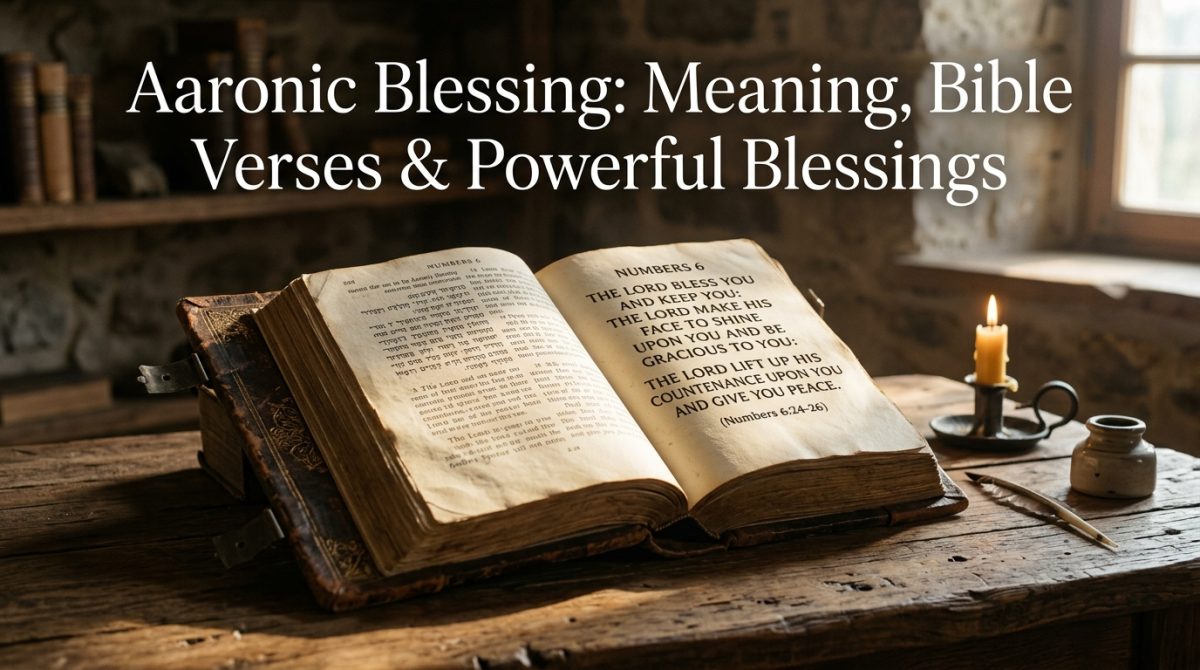
The full text of the blessing reads:
“The Lord bless you and keep you; the Lord make his face shine on you and be gracious to you; the Lord turn his face toward you and give you peace.” — Numbers 6:24–26
Right before these verses, God tells Moses exactly how the blessing should be used:
“Tell Aaron and his sons, ‘This is how you are to bless the Israelites. Say to them…'” (Numbers 6:23)
And immediately after, God adds a striking promise in verse 27 that by speaking this blessing over the people, the priests would be putting God’s own name on them, and He himself would bless them.
What Does the Aaronic Blessing Mean?
Each phrase in the blessing builds on the one before it, moving from protection, to favor, to peace. In Hebrew, the three lines actually grow longer and richer word by word, almost like the blessing is drawing the listener closer into God’s presence with every line.
Here’s a simple breakdown of the meaning:
| Line | Core Meaning |
| “The Lord bless you and keep you” | God’s provision and protection over your life |
| “The Lord make his face shine on you and be gracious to you” | God’s favor, delight, and undeserved kindness |
| “The Lord turn his face toward you and give you peace” | God’s presence and wholeness (Hebrew shalom) |
Put together, the blessing asks for God’s goodness, God’s presence, and God’s peace everything a person could need.
The Three Parts of the Aaronic Blessing Explained
Blessing and Protection
The opening line asks God to actively bring good into someone’s life and to guard them from harm. This isn’t a passive hope; it pictures God surrounding a person the way a shepherd watches over a flock.
Grace and Favor
The second line pictures God’s face “shining,” an image of warmth, approval, and closeness, similar to how a parent’s face lights up at the sight of their child. Grace here means receiving kindness that hasn’t been earned.
Peace and Presence
The final line is the longest and the climax of the blessing. The Hebrew word used, shalom, means far more than the absence of conflict; it points to wholeness, completeness, and well-being in every area of life.
Aaronic Blessing: “The Lord Bless You and Keep You”

This opening phrase is often the part people remember most, and for good reason. It’s simple, direct, and deeply reassuring. “Bless” speaks to provision God supplying what is needed. “Keep” speaks to protection God actively watching over and guarding.
Together, these two words paint a picture of a God who is neither distant nor indifferent, but personally invested in the well-being of His people, day by day.
Aaronic Blessing Prayer for Protection and Peace
You can turn the blessing into a personal prayer, either for yourself or someone you love. Here’s a simple version:
“Lord, bless and keep the ones I love today. Let Your face shine on them and be gracious to them in every circumstance. Turn Your face toward them, and give them a peace that doesn’t depend on their situation. Amen.”
Praying this blessing over your family, especially during hard seasons, is a way to put words to the hope Scripture already gives you.
How to Use the Aaronic Blessing in Your Daily Life

You don’t need to be a pastor or priest to use this blessing. Here are practical ways to bring it into everyday life:
- Speak it over your children before school or bedtime.
- Write it in a card for someone going through a difficult season.
- Pray it silently over yourself during moments of anxiety.
- Use it to close a family devotion or small group meeting.
- Share it as a text message when someone needs encouragement.
Because the blessing is short and memorable, it’s easy to keep close and recall whenever it’s needed.
Aaronic Blessing for Family, Friends, and Loved Ones
The Aaronic Blessing translates beautifully into personal relationships. Try adapting it for someone specific:
- For a child: “May the Lord bless you and keep you as you grow, and give you peace in every season of life.”
- For a friend facing hardship: “May God’s face shine on you today, and may His grace carry you through.”
- For a couple on their wedding day: “May the Lord turn His face toward you both and fill your marriage with His peace.”
Personalizing the blessing this way keeps its ancient words relevant to modern life and relationships.
Aaronic Blessing for Church Services and Worship
Many pastors close their services with this blessing because it sends the congregation out with a clear, God-centered word rather than a generic goodbye. It works well:
- At the very end of a worship service, as a benediction
- During baptisms or infant dedications
- At funerals, as a word of comfort and hope
- During ordination or commissioning services
Its rhythm and structure also make it easy to sing, and several worship songs have set the words to music, helping congregations memorize it naturally over time.
Beautiful Aaronic Blessing Quotes and Messages
If you’re looking for short, shareable versions of the blessing, here are a few ways to phrase it:
- “May the Lord bless you and keep you, today and always.”
- “May His face shine upon you and fill you with grace.”
- “May you walk in God’s peace, wherever this day takes you.”
- “The Lord’s favor go with you, and His peace stay with you.”
These shortened lines work well for greeting cards, social media captions, or a simple note left for someone who needs encouragement.
Conclusion
The Aaronic Blessing has endured for thousands of years because it speaks to something every person longs for: protection, favor, and peace. Rooted in Numbers 6:24–26, it isn’t just an ancient ritual; it’s a living prayer that still comforts hearts today, whether spoken from a pulpit or whispered over a sleeping child.
However you choose to use it in worship, in prayer, or in a simple message to a friend, the Aaronic Blessing remains one of the most powerful and enduring blessings in all of Scripture.
Frequently Asked Questions
What is the Aaronic Blessing also known as?
It’s often called the Priestly Blessing or Birkat Kohanim, and it comes from Numbers 6:24–26.
Who first spoke the Aaronic Blessing?
God gave the words to Moses, who instructed his brother Aaron, Israel’s high priest, to speak them over the people.
Can anyone say the Aaronic Blessing today?
Yes. While it was originally reserved for priests, many Christians and Jews today use it as a personal or family prayer.
What does “shalom” mean in the blessing?
Shalom means far more than peace as the absence of conflict; it refers to wholeness, well-being, and completeness in every part of life.
Why is the Aaronic Blessing used at the end of church services?
It’s often used as a benediction because it sends people out with God’s own words of blessing, favor, and peace rather than a general farewell.

Lilly Ella is a passionate writer and content creator specializing in wishes, quotes, and heartfelt messages. She shares inspiring content to help readers celebrate every special occasion with meaningful words. Follow her on Blessingliy.com for the latest wishes, greetings, and inspirational content.